What Does Tenant Insurance Cover in BC? A Plain-English Breakdown
Your belongings, worldwide liability, living costs after a fire or evacuation, and the limits that catch renters out. A plain-English guide to BC tenant insurance.
Updated October 26, 20268 min read

Tenant insurance in BC covers four things: your belongings (personal property), your legal responsibility if you hurt someone or damage their property (personal liability), extra costs if you can't live in your rental after a covered loss (additional living expenses), and small medical bills for guests who get hurt (voluntary medical payments). It does not cover the building itself, which is your landlord's responsibility. Exactly what responds to a given claim depends on your policy wording and your Cover Page.
Key takeaways
- A tenant policy is built from four blocks: personal property, personal liability, additional living expenses and voluntary medical payments.
- Bravo's tenant policy uses comprehensive perils wording, meaning it is designed to cover any cause of loss that isn't specifically excluded.
- Sewer back-up, flood and surface water, earthquake and identity theft are excluded by default but can be added as optional coverages.
- Some items, such as bikes, jewellery and cash, have special limits. Valuable items can be scheduled for higher cover.
- Bravo's tenant policy doesn't cover the building, your car, mould, deliberate acts or business property.
What are the four building blocks of tenant insurance?
Tenant insurance, renters insurance and apartment insurance are the same product. On a Bravo policy, it is made up of four main coverages.
1. Personal property. This covers your belongings, from furniture to electronics. Bravo's policy also covers belongings while temporarily away from your home, in a safety deposit box or in commercial storage. Improvements you've made to the unit are covered at replacement cost, and tenant's glass is covered up to $1,000.
2. Personal liability. If you're legally responsible for injuring someone or damaging their property, this pays for the claim. On a Bravo policy, liability applies anywhere in the world, including volunteer work for a charity or non-profit. Defence costs and supplementary payments are paid in addition to your liability limit.
3. Additional living expenses (ALE). If a covered loss makes your rental unlivable, ALE helps pay the extra cost of living elsewhere, such as a hotel or a temporary rental. Bravo's policy pays up to 20% of your personal property limit, and you can buy more.
4. Voluntary medical payments. If a guest is injured at your place, Bravo's policy pays up to $5,000 per injured person for medical costs incurred within one year, even if you weren't legally at fault.
You can see how these coverages fit together on our tenant insurance page.
Comprehensive vs named perils: what's the difference?
A "peril" is a cause of loss, such as fire, theft or a burst pipe. Policies come in two broad styles.
- Comprehensive perils cover any cause of loss except the ones the policy specifically excludes. Bravo's tenant policy is written this way.
- Named perils cover only the causes of loss listed in the policy. If a cause isn't on the list, it isn't covered.
Comprehensive wording generally gives broader protection. Either way, the exclusions section is the part worth reading closely.
Covered, not covered, or optional add-on?
Here's a quick summary of how common losses are treated on a Bravo tenant policy. Deductibles and limits apply throughout.
| Situation | Covered | Not covered | Optional add-on |
|---|---|---|---|
| Fire or smoke damage to your belongings | ✓ | ||
| Theft of your belongings | ✓ (special limits on some items) | ||
| Someone injured in your unit sues you | ✓ (personal liability) | ||
| Sewer back-up into your suite | ✓ Sewer Back Up Coverage | ||
| Flood or surface water from extreme weather | ✓ Water Protection Coverage | ||
| Earthquake damage | ✓ Earthquake | ||
| Identity theft costs | ✓ Identity theft | ||
| Mould, vermin, wear and tear | ✓ | ||
| The building's walls, roof and structure | ✓ (landlord's policy) | ||
| Your car | ✓ (motorized vehicles excluded) | ||
| Business equipment and stock | ✓ |
Real BC renter scenarios: which coverage responds?
Your bathtub overflows into the suite below
Your own damaged belongings fall under personal property. Your downstairs neighbour's damaged belongings fall under personal liability, if you're legally responsible. Note that on Bravo's policy the minimum deductible for any water loss is $2,500 unless your Cover Page shows a higher amount. Damage to the building itself is generally handled by the landlord's insurer, which may then try to recover its costs from the tenant who caused it (a process called subrogation). Our guide to water damage and sewer back-up insurance explains how water claims work in more detail.
Your bike is stolen from the building's storage locker
Theft of belongings falls under personal property, but bicycles and e-bikes (up to 500W and 32 km/h) have a special limit of $1,000 each on Bravo's policy. Whether a shared storage locker counts as part of your premises depends on your policy wording, so check with your broker. If your bike is worth more than $1,000, ask about scheduling it.
A wildfire evacuation order forces you out
If a public authority orders a mass evacuation, Bravo's policy pays additional living expenses up to 20% of your personal property limit for up to 30 days. Separately, if a public authority denies access to your home, ALE can apply for up to two weeks. Keep receipts for hotels, meals and other extra costs.
Sewer backs up into your basement suite
Sewer back-up is excluded by default. You'd need the optional Sewer Back Up Coverage, which responds to back-up from sewers, sump pumps, septic tanks and eavestroughs connected to the sewer. Bravo's policy also excludes water below ground level (with narrow exceptions), so if you rent a basement suite, ask your broker about this add-on and the Water Protection Coverage.
You're moving to a new apartment
On a Bravo policy, your belongings are covered during a move to a new principal residence in Canada for 30 days. Tell your broker your new address so the policy follows you.
Special limits: bikes, jewellery, cash and other valuables
Some items have lower limits because they're easy to steal or hard to value. On Bravo's tenant policy:
| Item | Special limit |
|---|---|
| Jewellery, watches and gems (theft) | $5,000 in total |
| Furs (theft) | $5,000 |
| Silverware (theft) | $5,000 |
| Bicycles and e-bikes (≤500W, ≤32 km/h) | $1,000 each |
| Watercraft | $2,500 |
| Securities | $5,000 |
| Software | $2,000 |
| Money | $300 |
| Bullion | $300 |
| Student's belongings away at school | $7,500 |
If an engagement ring, road bike or camera is worth more than these limits, you can schedule it on Bravo's policy. Scheduling generally means listing the item and its value, and may require an appraisal or receipt.
What does tenant insurance never cover?
Some things are outside Bravo's tenant policy no matter which add-ons you choose:
- The building. Walls, floors, roof and fixtures that belong to the landlord are covered under their policy. If you own a rental, landlord's insurance is the separate product designed for that.
- Your car. Motorized vehicles are excluded. In BC, vehicle insurance is handled separately, starting with mandatory ICBC Basic Autoplan coverage.
- Mould, fungi and vermin. These are excluded, as is ordinary wear and tear.
- Deliberate acts. Damage you cause on purpose isn't covered.
- Business property. Equipment and stock used for a business are excluded, so home-based businesses usually need separate cover.
Other exclusions include communicable disease, terrorism, and freezing damage while you're away for more than 10 consecutive days during the heating season, unless you shut off the water, had someone check the unit daily, or had low-temperature monitoring.
How to read your Cover Page
Your Cover Page (sometimes called a declarations page) is the summary of your specific policy. It's also the document to send a landlord who asks for proof of insurance. Check:
- Named insured and address. Make sure everyone who should be covered is listed and the rental address is correct.
- Personal property limit. This should reflect what it would cost to replace everything you own. It also sets your ALE limit, since ALE is a percentage of it.
- Liability limit. If your tenancy agreement requires tenant insurance, check whether it sets a minimum liability limit.
- Deductibles. Note your standard deductible and the water deductible, which is at least $2,500.
- Optional coverages. Confirm that sewer back-up, water protection, earthquake or identity theft appear if you chose them.
- Scheduled items. Any valuables you scheduled should be listed with their values.
Pricing depends mostly on your contents limit, deductible and add-ons; current ranges are on the Bravo tenant insurance page. If anything on your Cover Page is unclear, a Bravo broker can walk you through it.
Frequently asked questions
Does tenant insurance cover damage I cause to my landlord's building?
The building itself is insured under your landlord's policy, not yours. However, if you're legally responsible for damaging it, the personal liability part of your tenant policy is designed to respond, subject to the wording and exclusions.
Is tenant insurance mandatory in BC?
No provincial law requires it, but many BC landlords and property managers make it a condition of the tenancy agreement, so check yours for any required coverage or limits. Read more in our guide on whether tenant insurance is mandatory in BC.
Does tenant insurance cover earthquakes?
Not by default. Earthquake is an optional coverage on Bravo's tenant policy, and all earthquake shocks within 168 consecutive hours count as a single claim. It's worth considering if you live in coastal BC.
Are my belongings covered outside my apartment?
Yes, within limits. Bravo's policy covers belongings temporarily off-premises and in commercial storage, plus a student's belongings away at school up to $7,500. Special limits still apply.
Can I cancel my tenant insurance if I move in with family?
Yes. Bravo's tenant policy can be cancelled at any time, with a short-rate refund of unused premium. If you're moving to another rental instead, update your address so your tenant insurance moves with you.
This guide is general information, not advice. What a policy covers is set by its wording, declarations and endorsements, and varies by insurer. Talk to a licensed broker about your situation before you buy or change coverage.
More residential guides
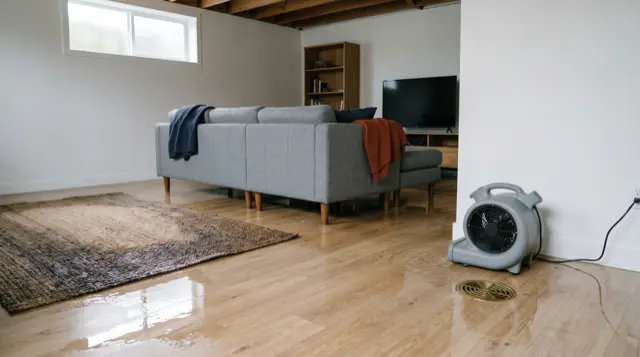
Water Damage, Sewer Backup and Overland Flood: What BC Home Insurance Covers
Burst pipes, sewer backup and overland flooding are three different claims in BC. See what a standard home, condo or tenant policy covers and which add-ons you need.
Read the guide
Replacement Cost vs Actual Cash Value: How BC Home Insurance Pays a Claim
Actual cash value, replacement cost and guaranteed rebuild pay out very differently after a claim. Worked examples for BC homeowners, condo owners and renters.
Read the guide
Strata Insurance Deductibles in BC: What Condo Owners Pay and How to Protect Yourself
How BC strata water and earthquake deductibles get charged back to owners, and how loss assessment and deductible add-ons on your condo policy close the gap.
Read the guideGet covered without the runaround.
Compare your options, get a quote, or talk to a licensed BC advisor when you want a second opinion.