Replacement Cost vs Actual Cash Value: How BC Home Insurance Pays a Claim
Actual cash value, replacement cost and guaranteed rebuild pay out very differently after a claim. Worked examples for BC homeowners, condo owners and renters.
Updated October 26, 20267 min read
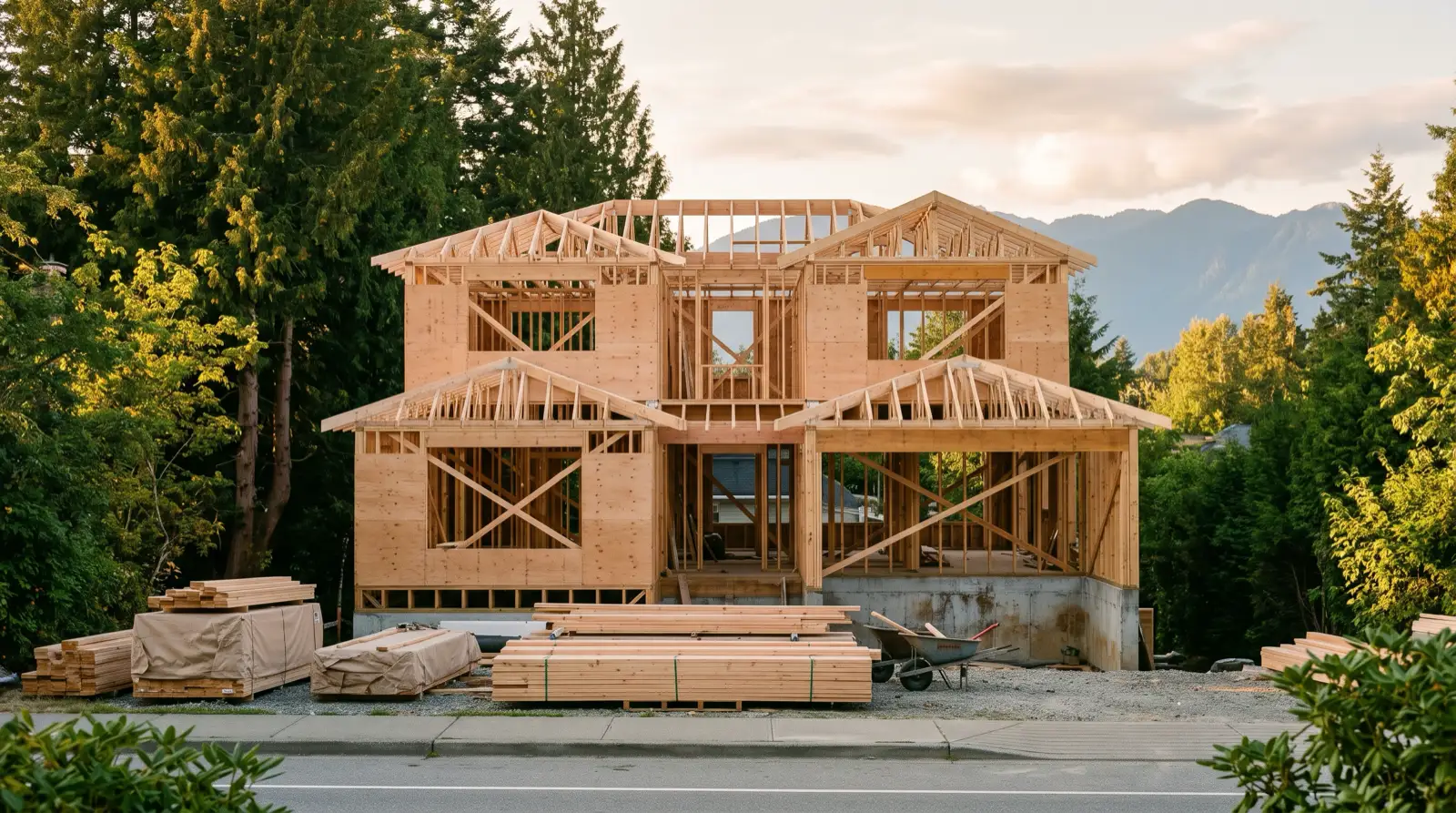
Replacement cost vs actual cash value comes down to one question: does your insurer pay what it costs to buy or rebuild something new today, or what your damaged item was worth after years of use? Actual cash value (ACV) is usually calculated as replacement cost minus depreciation, so it pays less for older things. Guaranteed replacement cost goes a step further and is designed to pay the full cost of rebuilding your home, even if that cost is higher than your policy limit.
Key takeaways
- Actual cash value is usually replacement cost minus depreciation. A six-year-old sofa is paid at what it was worth used, not what a new one costs.
- Replacement cost pays to repair or replace with new items of like kind and quality, up to your policy limit.
- Guaranteed replacement cost is designed to pay the full rebuild cost of your home even if it goes over the dwelling limit, subject to the policy conditions.
- The settlement basis can differ between your dwelling and your contents, so check both on your Cover Page.
- Your dwelling limit should reflect rebuild cost, not market value or your BC assessed value.
What do actual cash value, replacement cost and guaranteed replacement cost mean?
Actual cash value (ACV) is what an item was worth at the moment of loss. Insurers start with the cost to replace it new, then subtract depreciation for age, wear and expected lifespan. Older belongings, like electronics and furniture, can lose much of their value this way.
Replacement cost pays what it costs to repair or replace damaged property with new property of like kind and quality, without a deduction for depreciation. The payment is capped at the limit shown on your policy.
Guaranteed replacement cost applies to the building itself. It is designed to pay to rebuild your home as it was, even if the actual rebuild cost ends up higher than your dwelling limit. Many insurers attach conditions, such as keeping your limit up to date and rebuilding on the same site.
| Settlement basis | What it pays | Depreciation deducted? | Capped at your limit? |
|---|---|---|---|
| Actual cash value | Value of the item at the time of loss | Yes | Yes |
| Replacement cost | Cost to repair or replace new, like kind and quality | No | Yes |
| Guaranteed replacement cost | Full cost to rebuild the home | No | No (subject to policy conditions) |
A worked example: sofa, laptop and a dwelling rebuild
The numbers below are hypothetical and only illustrate the math. Actual depreciation schedules vary by insurer and by item.
Say a covered fire damages a six-year-old sofa and a six-year-old laptop:
- Sofa: a comparable new one costs $2,000. If the insurer treats a sofa as having a 10-year useful life, six years of use is 60% depreciation. ACV pays $800; replacement cost pays $2,000.
- Laptop: a comparable new one costs $1,800. Electronics usually depreciate faster, so after six years the ACV might be only $200. Replacement cost pays $1,800.
On ACV you would receive $1,000 for both items. On replacement cost you would receive $3,800. That gap is before your deductible, which applies either way.
Now the house. Suppose your dwelling limit is $700,000, but after a total loss the actual cost to rebuild is $850,000:
- Replacement cost pays up to the $700,000 limit, leaving you to cover the $150,000 shortfall.
- Guaranteed replacement cost is designed to pay the full $850,000, as long as you meet the policy's conditions.
Does it apply differently to the dwelling and to contents?
Yes. Your policy can settle the building and your belongings on different bases, so read each section of your Cover Page separately. A policy might offer replacement cost on the dwelling but ACV on contents unless you add replacement cost contents coverage.
On Bravo's Home Insurance policy, the dwelling section covers walls, roof and an attached garage, and replacement cost coverage is available for contents. Some items, such as outbuildings, are covered up to their own limits, so check those separately.
Many policies also pay ACV first and only top up to full replacement cost once you actually repair or replace the item. If you choose not to replace it, you may only receive the ACV amount.
Why isn't my rebuild cost the same as my home's market value?
Your dwelling limit should be based on what it costs to rebuild the structure: labour, materials, permits, demolition and debris removal. Market value and your BC Assessment value both include land, and land makes up a large share of property value in many BC communities, especially in Metro Vancouver.
That means a home can have a high market value but a lower rebuild cost, or the reverse. An older character home on an expensive lot may have a modest rebuild cost, while a custom home with high-end finishes can cost far more to rebuild than its sale price suggests.
Why underinsurance happens
Construction costs can rise quickly. If your dwelling limit was set years ago and never reviewed, it may no longer cover a full rebuild today. Shortages of trades and materials after a large regional disaster can push costs up further.
What about by-law and building-code upgrades?
If your home is rebuilt, it usually has to meet the current BC Building Code and local by-laws, not the standards it was built to. That can mean added costs for things like updated electrical, energy-efficiency or seismic requirements. Many policies limit or exclude these extra costs unless you have by-law or building-code upgrade coverage, which is usually subject to its own limit.
Ask your broker whether your policy includes this, and at what limit.
When does guaranteed rebuild matter most?
Guaranteed rebuild matters most when the cost of a full rebuild is hard to predict. That includes larger custom homes, homes with unusual materials or architecture, and properties where a regional disaster could drive up local construction prices.
Bravo's High Value Home Insurance includes guaranteed rebuild with no cap. It is advisor-led and is generally for homes with a rebuild cost over $1.5M, significant collections, or unusual features. The policy also includes earthquake cover and scheduled or blanket cover for art, jewellery, collections and wine.
How are condo owners and tenants affected?
Condo owners: in a strata, the strata corporation's master policy covers the building. Your own policy covers your belongings, liability and the unit improvements you or previous owners made beyond the original construction the strata must insure. Bravo's Condo Insurance includes unit improvements above strata limits and loss assessment, which covers your share if the strata's master policy comes up short. When valuing improvements, use what it would cost to replace upgraded flooring, cabinets and fixtures today.
Tenants: renters don't insure the building, but how your belongings and any upgrades are settled still matters. On Bravo's Tenant Insurance policy, improvements and betterments you've made to your rental are covered at replacement cost, and tenant's glass is covered up to $1,000. Special limits apply to items like jewellery, bicycles and money, and high-value items can be scheduled.
How should I set my limits?
- Build a home inventory. Walk through each room with your phone camera, and keep receipts for larger purchases. It helps you choose a realistic contents limit and speeds up a claim.
- Get a rebuild-cost estimate. Base your dwelling limit on rebuild cost, not your purchase price or assessed value.
- Review after renovations. A new kitchen, finished basement or addition can raise your rebuild cost and your contents value.
- Review regularly. Check limits at renewal, especially after periods of rising construction costs.
If you're unsure where your numbers should land, talk to a Bravo broker who can walk through your policy wording with you.
Frequently asked questions
Is actual cash value or replacement cost better?
Replacement cost usually pays more because it doesn't deduct depreciation. It generally costs more in premium than ACV. For most people, replacement cost on contents means they can actually replace what they lost without paying the difference themselves.
What is guaranteed replacement cost on home insurance?
It is coverage designed to pay the full cost to rebuild your home, even if that cost exceeds your dwelling limit. It usually comes with conditions, so the exact wording on your policy decides how it applies. On a Bravo High Value Home policy, guaranteed rebuild has no cap.
Does my BC assessed value tell me how much dwelling coverage I need?
No. Your BC Assessment value includes land, which isn't damaged in a fire and doesn't need to be rebuilt. Your dwelling limit should reflect the cost to rebuild the structure itself.
Will I get the full replacement cost right away?
Not always. Many policies pay ACV first and pay the rest once you repair or replace the item within the time your policy allows, often described as a reasonable time. Check your policy wording for the exact condition.
What does home insurance cover besides the building?
On Bravo's Home Insurance policy, coverage includes contents, personal liability, sudden and accidental internal water damage, outbuildings up to limits, and additional living expenses. Overland water, sewer back-up and earthquake are optional add-ons. The policy wording and your Cover Page decide what applies to you.
This guide is general information, not advice. What a policy covers is set by its wording, declarations and endorsements, and varies by insurer. Talk to a licensed broker about your situation before you buy or change coverage.
More residential guides
Water Damage, Sewer Backup and Overland Flood: What BC Home Insurance Covers
Burst pipes, sewer backup and overland flooding are three different claims in BC. See what a standard home, condo or tenant policy covers and which add-ons you need.
Read the guide
What Does Tenant Insurance Cover in BC? A Plain-English Breakdown
Your belongings, worldwide liability, living costs after a fire or evacuation, and the limits that catch renters out. A plain-English guide to BC tenant insurance.
Read the guide
Strata Insurance Deductibles in BC: What Condo Owners Pay and How to Protect Yourself
How BC strata water and earthquake deductibles get charged back to owners, and how loss assessment and deductible add-ons on your condo policy close the gap.
Read the guideGet covered without the runaround.
Compare your options, get a quote, or talk to a licensed BC advisor when you want a second opinion.